
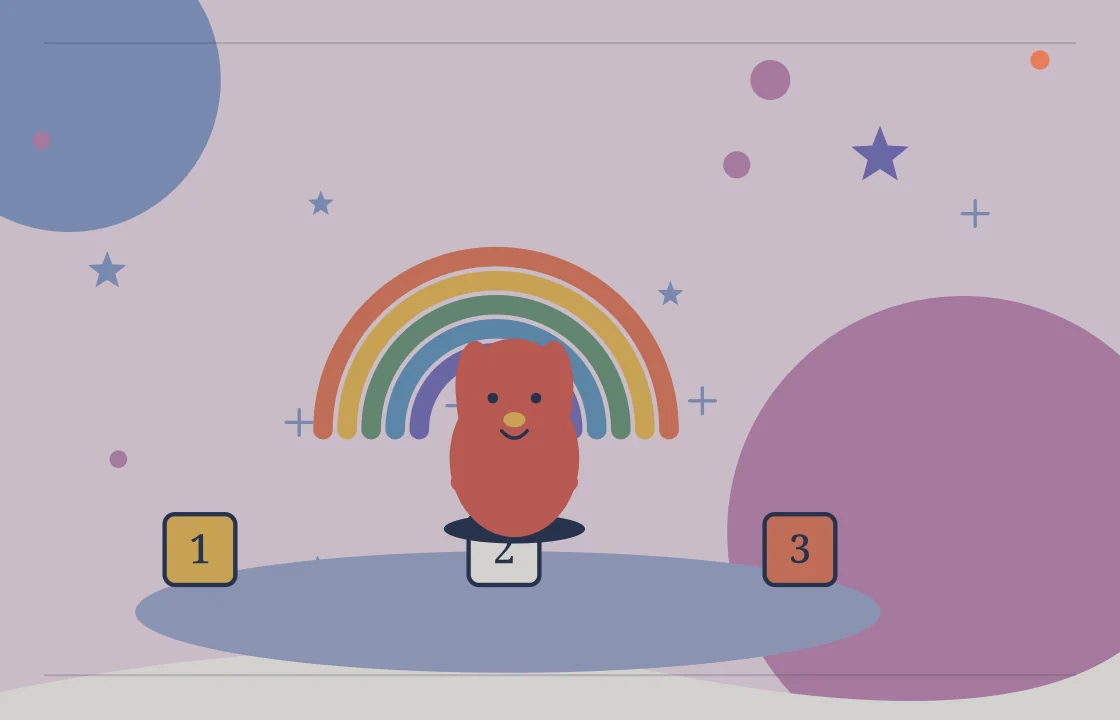
A movement trail doesn't need to resemble an indoor playground. In fact, the calmer version often works better: a few marked stations, lots of space and a child who chooses what each stop means. Use a clear, non-slip area and favour movements that stay low to the ground. Nothing should involve balancing on furniture, jumping from heights or racing through a cluttered room.
What you'll need
- Clear floor space
- Soft toy
- Flat non-slip floor markers (optional)
Make a route you can see end to end
Pick three safe locations in one room. A cushion resting flat on the floor might mark the 'island', a piece of painter's tape can mark a line on suitable flooring, and a teddy can sit at the final station. Test the floor for slipping and remove cables, sharp corners and small objects. It should be easy for an adult to stay close and supervise every part.
Choose one movement for each station
At the first stop, tiptoe around the island. At the second, stretch your arms like a tall tree. At the third, gently march on the spot and say hello to the teddy. Older children may suggest imaginative changes; younger participants may simply want to repeat one station. Follow their comfort and ability rather than counting laps.
Tell a story along the way
You could be delivering letters across a pretend town, walking carefully past a sleeping dragon or exploring three planets. Let the child rename the stations or invite a soft toy along. A story makes the activity flexible: the mission can end after five minutes or continue for twenty, depending on everyone’s energy.
Change the pace rather than adding height
To vary the game, try doing the route slowly, quietly or while carrying a lightweight soft toy. Avoid stacking objects into climbing towers or creating jumping challenges from chairs or sofas. If the floor becomes slippery or someone gets overexcited, pause and simplify the course. Movement games should never depend on taking bigger risks to stay interesting.
Finish at a useful moment
Announce the end of the mission, help put the markers away and leave the floor clear. You could finish with a drink of water and a short story. If the child wants more, make a note of their favourite station for next time. There's no need to preserve the trail permanently or make every repeat more difficult.
Close adult supervision is essential. Use a clear non-slip floor and avoid raised obstacles, unstable furniture, strings across walkways, trampolines or unsafe balance challenges.
Age ranges and timings are loose guides, not safety certifications. Adults should adapt activities to a child's development, abilities, needs and environment. Read our full safety and age guidance.